Sports Injury Diagnosis
Acute and chronic injuries of bones and joints; injuries of shoulder, elbow, hip, knee, ankle and other joints.
Dr. Jiwu Chen is the Director of Sports Medicine at Shanghai General Hospital, Shanghai Jiao Tong University. He is a renowned surgeon in arthroscopic surgery and the minimally invasive treatment of sports injuries.
Years Experience
Annual Surgeries
Annual Patients
Total Surgeries
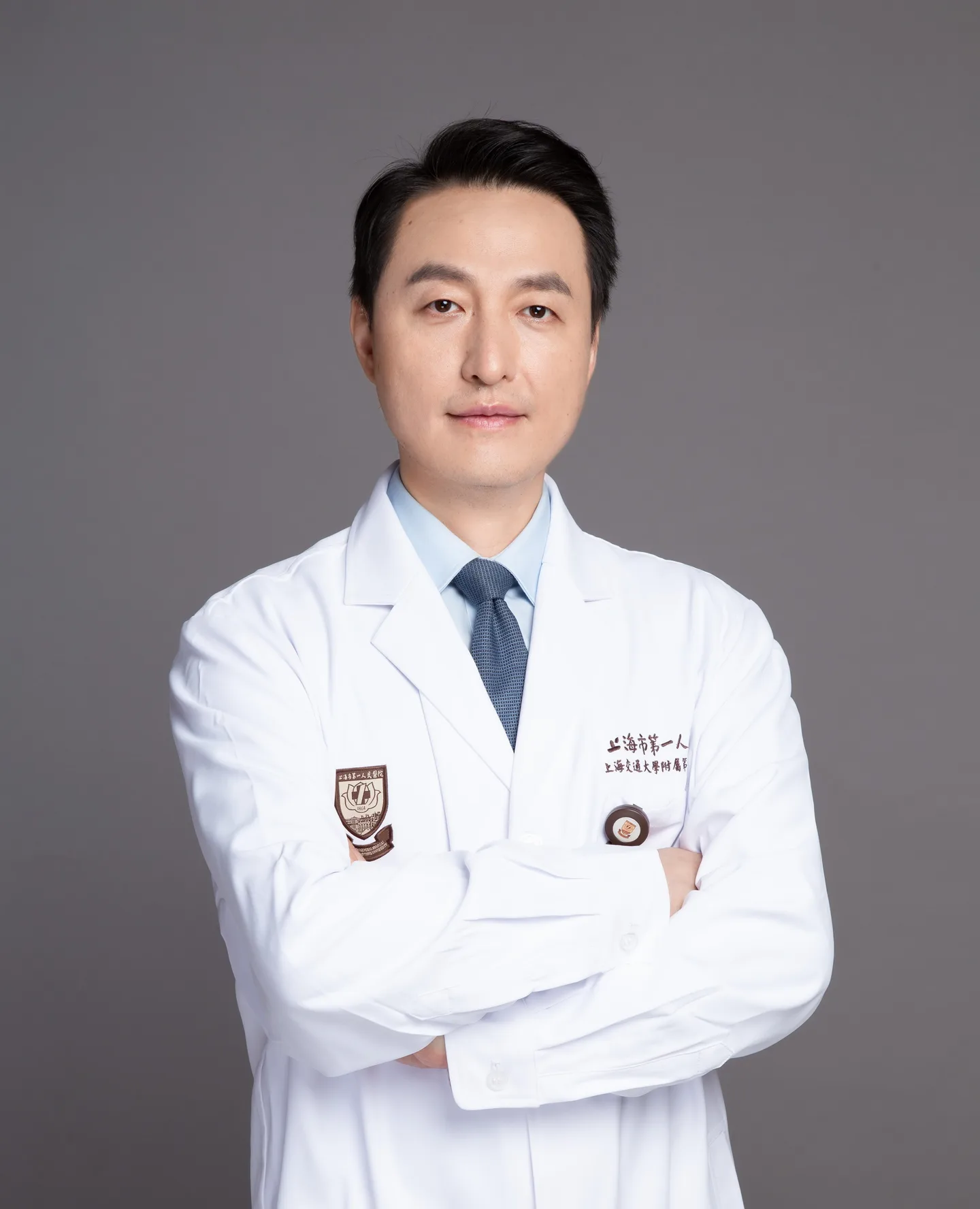
M.D. & Ph.D., Professor & Consultant
Focusing on tissue repair of sports injuries, musculoskeletal regeneration, and the application of exosomal mechanisms in muscle repair. Lead investigator for multiple National Natural Science Foundation projects.
Acute and chronic injuries of bones and joints; injuries of shoulder, elbow, hip, knee, ankle and other joints.
Ligament, tendon, cartilage, synovial membrane, and meniscus injuries.
Advanced management of recurrent joint dislocations and instability.
Combining precision arthroscopic surgery with systematic sports rehabilitation to maximize recovery of athletic ability and quality of life.
USA
USA
Fudan University
Fudan University
Shanghai General Hospital & Huashan Hospital, Sports Medicine
Shanghai Jiao Tong University
Shanghai General Hospital
Chinese Medical Association
US & Asia-Pacific Societies
American Shoulder and Elbow Surgeons
Doctor-related announcements, clinic notes, academic activity, and patient guidance.
View more2026.09.18
Chinese and Swiss specialists met at Shanghai General Hospital on September 18 for a surgical demonstration, research discussions and five clinical cases exploring hip arthroscopy and open hip preservation surgery.
Read preview2026.07
The Sports Medicine Department of Shanghai General Hospital is welcoming orthopaedic and sports medicine doctors from around the world for 1- to 6-month visiting placements focused on arthroscopy, sports injury care, and clinical observation.
Read preview2026.06
Dr. Jiwu Chen joined Shanghai Dragon TV Doctors Talk Wellness to explain how sports medicine helps people prevent injuries, recover safely, and exercise with an individualized plan.
Read previewThe Sports Medicine Department of Shanghai General Hospital is welcoming orthopaedic and sports medicine doctors from around the world for 1- to 6-month visiting placements focused on arthroscopy, sports injury care, and clinical observation.
Open to orthopaedic and sports medicine doctors from around the world.
Patient education articles on sports injuries, arthroscopic surgery, rehabilitation, and safe return to activity.
View moreLatest patient education
Knee injuries
Why ACL grafts can tear again, and how tibial slope, varus or valgus alignment, tunnels and meniscal function guide osteotomy and staged revision decisions.
Knee injuries
Functional patella alta, X-ray and MRI measurements, research thresholds for PHI and SPE, and their relationship to engagement, instability, anterior knee pain and treatment decisions.
Shoulder injuries
How ultrasound, MRI and X-rays contribute to preoperative assessment of massive cuff tears, and how retraction, atrophy and fatty infiltration influence repairability and treatment choices.
38 articles
Compare conservative care, surgery, rehabilitation, reconstruction, and repair techniques.
18 articles
Browse articles that mention sports, training patterns, and return-to-activity issues.
Understand the language of sports injuries and recovery. Clear definitions, clinical context and reliable sources, from anatomy to treatment.
Anterior cruciate ligament
The anterior cruciate ligament (ACL) is a crucial fibrous band in the center of the knee joint connecting the femur to the tibia, functioning primarily to restrain anterior tibial translation and control rotational stability.
Meniscus
The meniscus is a specialized crescent-shaped fibrocartilaginous structure situated between the femoral condyle and tibial plateau in the knee (comprising the medial and lateral meniscus), acting as a vital shock absorber, load distributor, joint lubricator, and secondary stabilizer.
Rotator cuff
The rotator cuff is a dynamic functional complex comprising the supraspinatus, infraspinatus, teres minor, and subscapularis muscles and their confluent tendinous insertions encapsulating the humeral head, stabilizing it within the glenoid fossa (concavity-compression) during arm elevation and rotation.
Brief, easy-to-understand answers to common sports injury and rehabilitation questions.
Pain relief alone does not confirm union. Examination, follow-up imaging, gait and graded loading guide return. Even screw fixation does not remove delayed-union or refracture risk with premature impact. Recurrent local pain warrants reducing load and review.
No. Withdrawal bleeding can mask natural cycle recovery and does not replace improved fueling and training adjustment. Amenorrhea needs evaluation for pregnancy and other endocrine causes, plus bone and nutritional health. Do not change prescribed medication independently.
Deep flexion under load can stress the healing attachment. Loading, flexion limits and bracing depend on the procedure and associated injuries. Restore gait, motion and strength before graded squats and sport; partial-meniscectomy timelines are unsuitable.
Sports medicine patient education